My new b l o g
Friday, 24 January 2014
New Blog Address


Monday, 20 May 2013
Pink Purslane

It was such a beautiful evening, I took myself for a stroll and found the pathways vibrant green, lush and gloriously sunlit.

A profusion of Pink Perslane, banks of spoon-shaped leaves, fleshy stems and pretty pink flowers.

It is a plant that is not a native, but was introduced in the 18th century from Siberia and North America. The leaves are edible and the beety flavour is good in salads (another name for it is miner's lettuce), or they can be cooked. Must try them. For now there was sufficient enjoyment in seeing them growing wild, carpeting my walk, their fresh pinky faces smiling a good evening.


Sunday, 19 May 2013
Long-tailed Tits
I've just had a wonderful encounter coming out of my store-shed - a Long-tailed Tit flew in making lots of noise, and landed on the door jamb. I stood motionless, watching it - absolutely amazed I should be only inches away. Then, it flitted from the door frame onto my arm - just above the elbow (I can feel the sensation of it landing and its claws gripping my shirt as I write this - like a little kiss!).
Divine.

Long-tailed Tit painting by Finch Arts
A bird has never landed on me like that before - I wonder if it is nesting in the shed and was trying to see me off!
Friday, 17 May 2013
Special Bootscraper
Recently I was asked to make a Bootscraper as gift for a Chairman who was stepping down after 17 years, to be presented at the company's Annual General Meeting.

It turned out to be a rather special privilege as the company was QMJ Publishing Ltd - QMJ Publishing is a privately owned
publishing and exhibition business that serves the quarrying, recycling
and natural stone industries (they are responsible for publishing the Natural Stone Specialist magazine, and also for running the Natural Stone Show each year!)
So I feel very proud to share the publicity with you
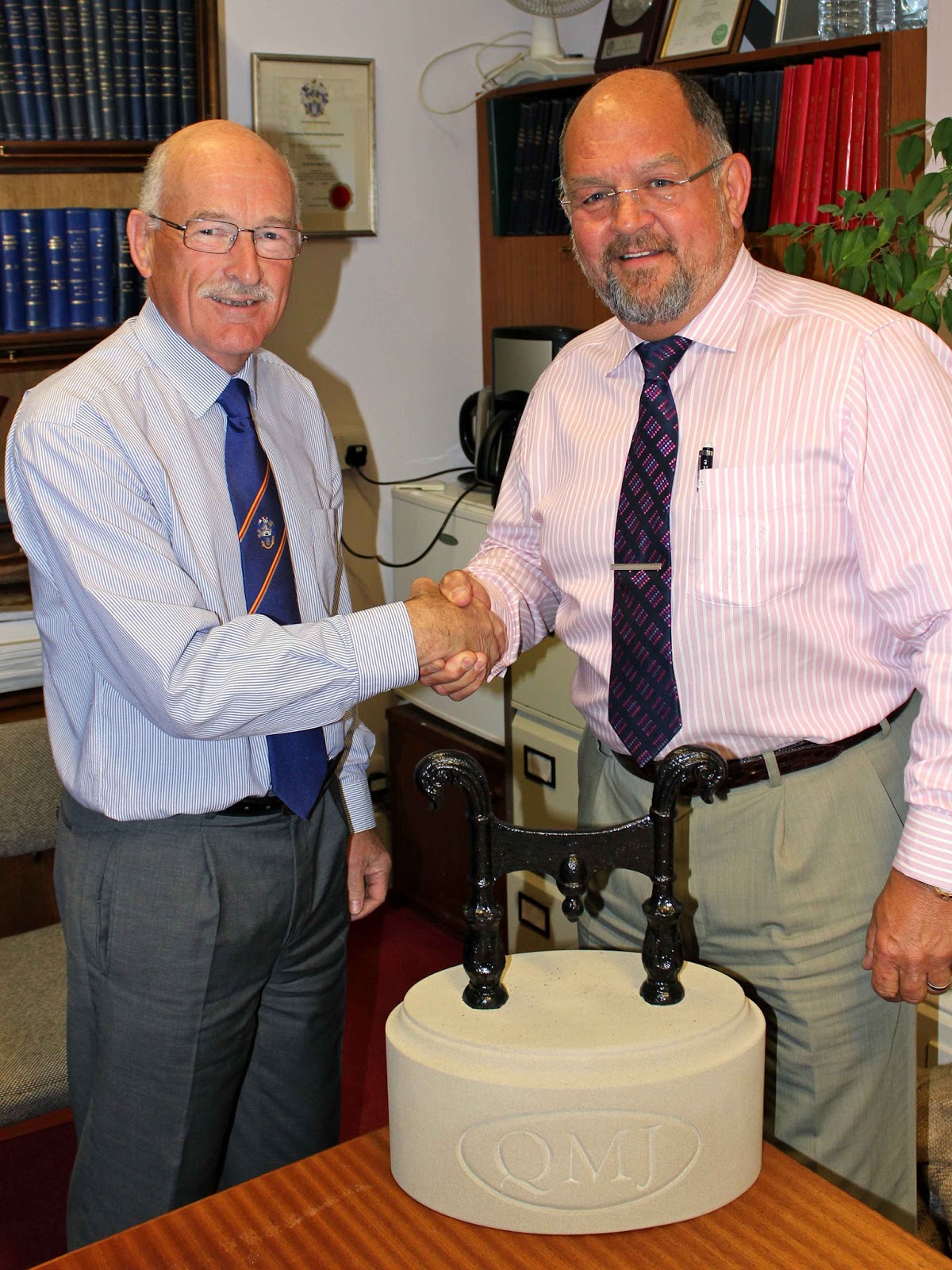
Changing of the guard at QMJ
PICTURED above is John Hopkins (left of photo) stepping down as chairman of QMJ Publishing Ltd at the company’s AGM on Thursday 9 May 2013 with his successor, Terry Last. As a memento of his 19 years on the board, 17 of which were as chairman, John was presented with a handsome boot scraper specially commissioned from North Yorkshire based sculptor, Jennifer Tetlow. The base of the boot scraper was hand carved in the shape of the QMJ logo from a block of Woodkirk Yorkstone, the sculptor’s favorite material, which was sourced from Woodkirk Stone’s Brittania Quarries at Morley, near Leeds.
Thursday, 16 May 2013
Pig on the run

Not something you see every day - a Pig in the village, running towards you in the road. This one was trotting happily in Lastingham, making pig noises. A neighbour corralled it into a nearby front garden. It immediately used its rubbery nose to lift the latch and tried to push its way out - luckily seen in time and string was procured to keep it contained.

It was very tame and friendly, happily taking apples, carrots - and actually anything it was offered - and enjoyed scratches and tickles from us all.

The Village grape-vine is super effective, and soon the owner came to rescue her piggy.

What characters pigs are - and how communicative - reminds me of watching wild boar when I was trying to get a likeness for carving a pair of boar in stone.
Subscribe to:
Posts (Atom)



 Posts
Posts


